
Automobile
How Many Parts Does a Car Have? A Simple Yet Complete Guide

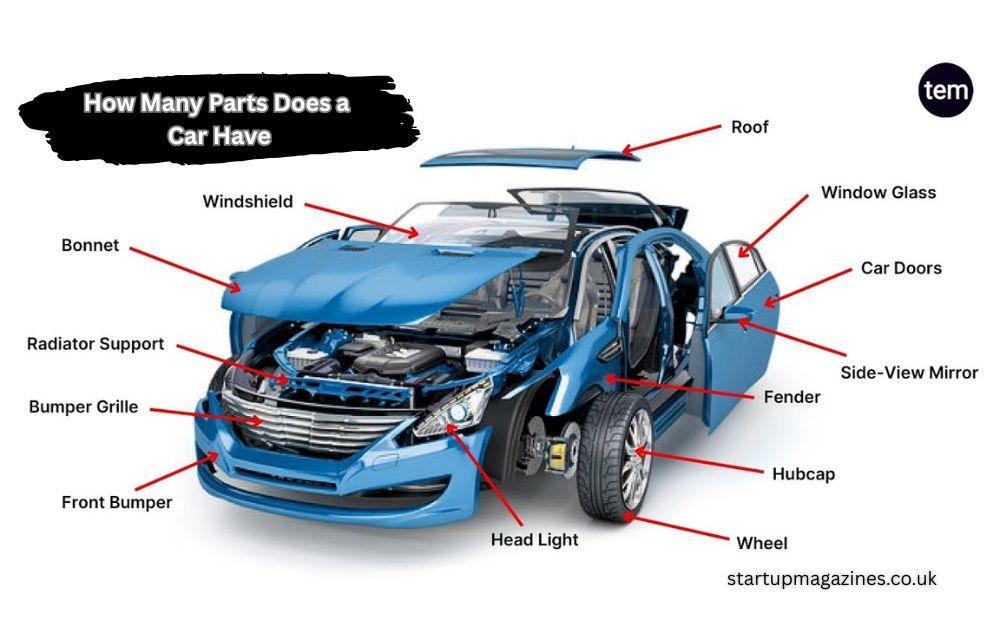
How Many Parts Does a Car Have is not just a machine made of wheels and an engine; it is a highly engineered system made up of thousands of interconnected components. Every part, no matter how small, plays a role in ensuring performance, safety, and comfort. From the steering system to electronic sensors, everything works in harmony like a well-organized orchestra. As automotive technology has advanced, cars have become more complex, integrating software, sensors, and mechanical systems together. This is why even a basic vehicle today is far more sophisticated than older models from just a few decades ago.
On Average, How Many Parts Does a Car Have?
On average, a standard car contains around 20,000 to 30,000 individual parts when every small component is counted. These include everything from large assemblies like the engine and transmission to tiny items such as bolts, screws, and electrical connectors. If we only count major components, the number drops significantly to around 1,500 to 2,000 parts. The difference comes from how deeply you break down each system into smaller pieces. Luxury and high-tech vehicles usually have even more parts due to added features and advanced systems.
How Many Moving Parts Does a Car Have?
A car contains thousands of moving parts, especially in traditional internal combustion engine vehicles. Moving parts are components that physically shift or rotate during operation, such as pistons, crankshafts, gears, and valves. In a gasoline engine alone, there are hundreds of moving elements working continuously under heat and pressure. When combined with the transmission, drivetrain, and suspension systems, the total number increases significantly. However, not all parts in a car are moving, as many are fixed structures that provide support and stability.
Engine and Powertrain Components
The engine and powertrain are considered the heart of a car and contain some of the most complex assemblies. The engine alone consists of pistons, cylinders, camshafts, valves, and fuel injectors, all working together to generate power. The powertrain also includes the transmission system, driveshaft, and differential, which transfer that power to the wheels. Each of these systems is made up of many smaller parts that must function precisely. Even a minor issue in one component can affect the entire vehicle’s performance, which shows how interconnected everything is.
Electrical and Electronic Systems in Cars
Modern cars rely heavily on electrical and electronic systems that control everything from engine performance to entertainment features. These systems include sensors, wiring harnesses, control units, and onboard computers. Features like GPS navigation, parking sensors, airbags, and automatic braking systems all depend on electronics. As cars become smarter, the number of electronic components continues to grow rapidly. In fact, in newer vehicles, electronics often account for a large portion of the total parts count, sometimes rivaling mechanical components in complexity.
Electric Cars vs Traditional Cars
Electric vehicles (EVs) have significantly fewer moving parts compared to traditional gasoline cars. A typical EV has around 10,000 to 20,000 total parts, mainly because it does not require complex engines, fuel systems, or exhaust systems. Instead of hundreds of engine components, EVs use a simpler electric motor with far fewer moving elements. However, they still contain advanced battery systems and electronic controls, which add their own level of complexity. This reduction in mechanical parts is one reason why EVs are often considered more reliable and easier to maintain.
Why Do Cars Have So Many Parts?
Cars have so many parts because they are designed to balance performance, safety, comfort, and durability. Each system in a vehicle has a specific role, whether it is controlling speed, ensuring passenger safety, or improving fuel efficiency. Safety features like airbags and ABS require multiple sensors and mechanical triggers to function correctly. Comfort features such as air conditioning, infotainment, and power windows also add more components. Together, all these systems create a complete driving experience, but they also increase the total number of parts significantly.
Engineering and Manufacturing of Car Parts
Building a car is one of the most complex manufacturing processes in the world. Each vehicle is assembled from thousands of components that must fit together with extreme precision. Automotive factories use robotics, automation, and strict quality control systems to ensure accuracy in every step. Even a small error in one part can affect the entire assembly process. Engineers spend years designing systems that are both efficient and durable, ensuring that all parts work together smoothly under different driving conditions.
Conclusion
A car is far more than a simple machine; it is a carefully engineered system made up of tens of thousands of parts working together in harmony. On average, most cars contain between 20,000 and 30,000 parts, while the number of moving parts depends on the engine type and design. From mechanical systems to advanced electronics, every component plays a vital role in performance, safety, and comfort. As technology continues to evolve, cars are becoming more efficient and intelligent, but also more complex in design.
FAQs About how many parts does a car have
1. How many parts does a car have on average?
A typical car has around 20,000 to 30,000 parts depending on its design and features.
2. How many moving parts are in a car?
A traditional car can have thousands of moving parts, especially within the engine and transmission systems.
3. Do electric cars have fewer parts than gasoline cars?
Yes, electric cars have fewer mechanical parts, usually around 10,000 to 20,000 total components.
4. What is the most complex part of a car?
The engine is considered the most complex system due to its many interconnected moving components.
5. Why do modern cars have so many electronic parts?
Modern cars use electronics for safety, navigation, automation, and entertainment, increasing overall part count.


Nimedes: Exploring Nimede, Nimedical, and Eesti Nimede Statistika

Myreadignmnaga: Understanding the Growing Popularity of Online Manga Reading

Pabington: Meaning, Purpose, and Growing Online Curiosity

Be1crypto.com Investment: A Complete Guide for Smart Investors

Keine Karriere Subdomain Gefunden: What It Means and How to Fix It
